
Revenue Recognition in the Software Industry
Revenue recognition for the software industry can be complex. Make sure you get it right using this supplement to BDO's "Blueprint" on ASC 606.
BY ACCESSING THE FASB DOCUMENTS ON THIS SITE, YOU ACCEPT AND AGREE TO THESE FASB TERMS AND THE WEBSITE TERMS AS APPLIED TO YOUR USE OF THIS SITE OR ANY FASB LICENSED DOCUMENTS.
Overview
A software entity applies the industry-agnostic revenue recognition guidance in ASC 606, Revenue from Contracts with Customers, to determine the amount and timing of revenue to be recognized from a contract with a customer. The judgments inherent in applying the guidance, the unique nature of software products, and the continuous evolution of those products and related pricing strategies can result in unique revenue recognition challenges for software entities. This industry supplement focuses on considerations specific to the software industry when identifying performance obligations in Step 2 and allocating the transaction price to those performance obligations in Step 4 of the five-step revenue recognition model.
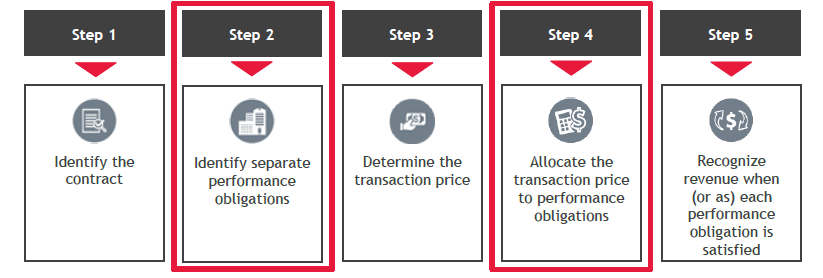
Step 2: Identifying Performance Obligations
To correctly recognize revenue from a contract with a customer, a software entity must appropriately identify the performance obligations in Step 2. A performance obligation is a separate unit of account for determining when and how much revenue to recognize. Software arrangements may include software licenses, software-as-a-service (SaaS), hardware, post-contract support, and professional services such as implementation, training, or customization.
As software offerings have evolved from traditional on-premise licenses to SaaS and hybrid offerings, pricing models have also evolved, including greater use of usage-based pricing. The variety of product offerings and pricing models can make identifying performance obligations complex, and nuanced differences in the facts and circumstances may lead to different conclusions for seemingly similar arrangements.
Step 4: Allocating the Transaction Price to Performance Obligations
In Step 4, a software entity allocates the transaction price to the performance obligations identified in Step 2. ASC 606 generally requires allocation based on the relative standalone selling price (SSP) of the goods or services underlying each performance obligation. An observable price is used when available; otherwise, the entity estimates SSP using an appropriate method, such as the adjusted market assessment, expected cost plus a margin, or, in certain circumstances, residual approach. ASC 606 also provides exceptions to the general allocation model for certain discounts and variable consideration.
Determining SSP can be complex for software entities, particularly when goods or services are not sold separately or pricing varies across customers or arrangements. The SSP determined at contract inception affects the amount allocated to each performance obligation and ultimately recognized as revenue when or as that obligation is satisfied.
Supplement to our Blueprint
This publication refers to the five-step revenue recognition model. We encourage you to read this Supplement together with our Blueprint, Revenue Recognition Under ASC 606, which includes a detailed discussion of the five-step revenue recognition model and other key concepts in ASC 606.